
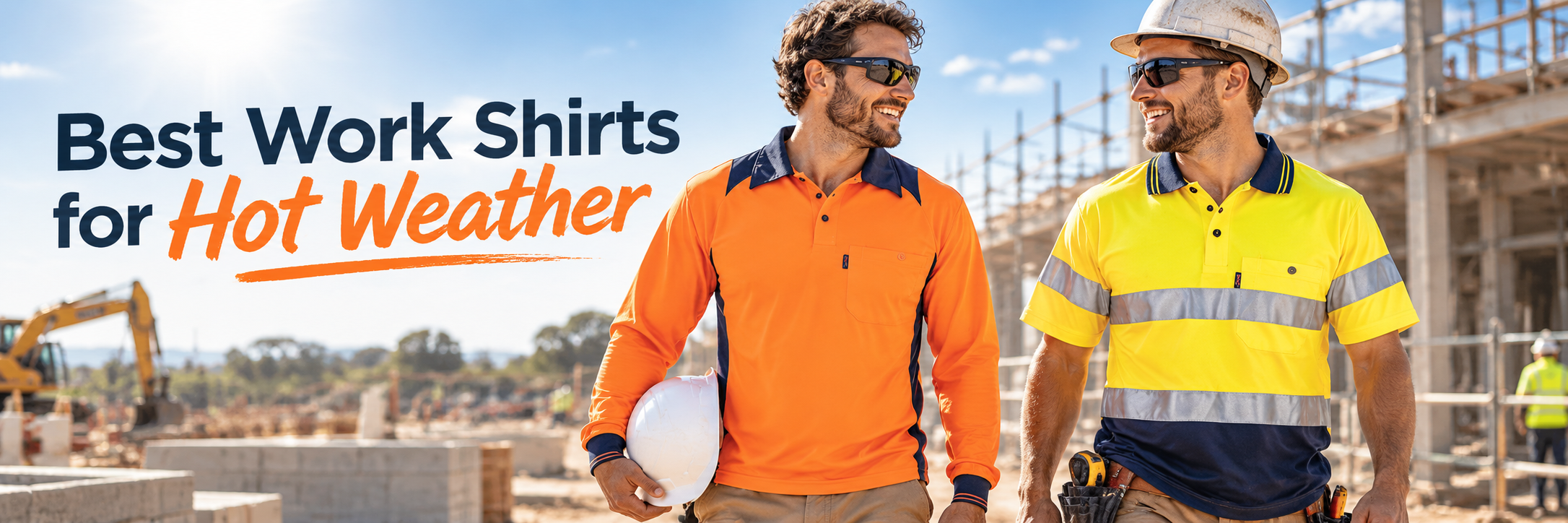
A hot Australian job site can make the wrong work shirt feel twice as heavy by lunchtime. Add direct sun, sweat, humidity and hours of physical work, and the shirt you barely noticed in winter can quickly become the first thing you want to change.
That is why choosing a summer work shirt should involve more than grabbing the thinnest shirt you can find.
Australian tradies need to consider airflow, fabric, fit, sleeve length, sun exposure, visibility and workplace requirements. The best option is the shirt that suits both the heat and the work you actually do.
If you are replacing last summer's shirts or building a better rotation for 2026–27, here is what to look for before you buy.
What Makes a Good Work Shirt for Hot Weather?
There is no single work shirt that will be right for every tradie, but several features become particularly important once temperatures start climbing.
- Lightweight fabric
- Breathable construction
- Ventilation where appropriate
- A fit that allows easy movement
- Suitable coverage for your working environment
- Hi-vis options where required
- Construction suitable for regular work and washing
Start with these features, then narrow your choice according to your trade and workplace requirements.
Ready to replace the heavy shirts? Browse work shirts at DNC Direct for your summer rotation.
1. Lightweight Work Shirts for Long Summer Shifts
Fabric weight is one of the first things worth checking when shopping for summer work shirts.
A lightweight shirt can reduce unnecessary bulk during physically demanding work. This becomes particularly noticeable when you are climbing, carrying, bending and moving around for hours in warm conditions.
Do not judge a shirt by appearance alone. Check the product specifications and fabric information before buying. Two shirts that look almost identical can feel very different once you have been working in them for several hours.
2. Vented Work Shirts Can Help With Airflow
Ventilation is worth considering for tradies who regularly work outdoors or perform physically demanding jobs.
Vented work shirts are designed to encourage airflow through particular areas of the garment. Depending on the design, vents may be positioned across areas such as the back or underarms.
This can make vented shirts particularly appealing for construction workers, landscapers, plumbers, electricians and other tradies spending long periods in warm working environments.
Who Should Consider a Vented Work Shirt?
- Tradies working outdoors for long periods
- Workers performing physically demanding tasks
- Anyone working in warm workshops or warehouses
- Tradies who regularly find their current shirts too heavy during summer
3. Cotton Work Shirts Remain a Popular Choice
Cotton work shirts have been worn across Australian worksites for years, and they remain a familiar option for many tradies.
When shopping for a cotton shirt for summer, however, pay attention to more than the word "cotton". Fabric weight and garment construction matter.
A lightweight cotton work shirt can feel very different from a substantially heavier cotton drill shirt during a hot afternoon.
Look at the complete product rather than choosing based on fibre alone.
4. Long Sleeve or Short Sleeve: Which Is Better in Summer?
This is one of the biggest questions when choosing summer work shirts.
Short-sleeve shirts provide less coverage and can be appealing during hot conditions. For some indoor jobs, workshops, warehouses and particular worksites, they may be a practical choice.
Long sleeves, however, should not automatically disappear from your summer wardrobe.
Outdoor tradies also need to think about sun exposure and workplace requirements. A lightweight long-sleeve work shirt can provide additional coverage while still being suitable for warmer conditions when the fabric and construction are chosen carefully.
Consider Short Sleeves When:
- Your workplace permits them
- Your tasks do not require additional arm coverage
- You primarily work indoors or in shaded environments
- You prefer less coverage during hot conditions
Consider Long Sleeves When:
- You spend significant time outdoors
- Additional arm coverage is appropriate for your work
- Your workplace requires long sleeves
- You want a lightweight layer between your skin and direct sun
The right choice depends on the job rather than temperature alone.
5. Hi-Vis Work Shirts for Hot Australian Job Sites
Hot weather does not remove workplace visibility requirements.
If hi-vis clothing is required on your site, summer is a good time to review whether the shirts in your current rotation are appropriate for warmer conditions.
Look for hi-vis shirts designed with lightweight or breathable construction where suitable. Depending on the garment, you may also find ventilation and other features designed for active work.
Always check individual product information and confirm that the garment is appropriate for your workplace and the work being performed.
Browse hi-vis workwear at DNC Direct and prepare your rotation before peak summer.
6. Don't Ignore the Fit
A shirt can use a lightweight fabric and still be frustrating if the fit does not suit your work.
Your work shirt needs to move when you do.
Think about a normal shift. You may be reaching overhead, climbing ladders, bending, crouching, carrying materials or getting in and out of a vehicle dozens of times.
A shirt that pulls across your shoulders, restricts your arms or constantly needs adjusting can become annoying very quickly.
Check the size guide for the individual product instead of automatically buying the same size across every style.
7. Think About Sweat Before Buying
Summer means sweat. There is no clever marketing phrase that changes that.
The important question is how practical your work shirt remains once you have been wearing it for several hours.
Consider fabric weight, airflow and how the garment fits against your body. If you regularly finish a shift with a shirt completely soaked through, having several suitable shirts in rotation also becomes important.
8. One Good Summer Shirt Isn't Enough
Finding a shirt you like is only half the job.
If you work five or six days a week, relying on one or two summer shirts means constant washing or falling back on heavier clothing while your preferred shirts are unavailable.
A Practical Summer Work Shirt Rotation Could Include:
- Several lightweight everyday work shirts
- Vented shirts for particularly hot shifts
- Hi-vis shirts where required
- Long-sleeve shirts for additional coverage
- Short-sleeve shirts where appropriate
- A spare clean shirt for extremely hot or dirty days
You do not necessarily need a different shirt for every situation. If you find a style that suits your job, buying several can make your weekly workwear rotation much simpler.
9. Check Last Summer's Shirts Before Buying More
Before placing an order, pull out the work shirts you wore last summer.
Check the areas that tend to receive the most wear, including collars, cuffs, seams, pockets, buttons and underarms. Look for fading, thinning fabric, tears and stitching that is beginning to fail.
For hi-vis garments, pay particular attention to their overall condition and suitability for continued workplace use.
Then separate your shirts into three simple groups:
- Still good for regular work
- Useful as backup shirts
- Ready to be replaced
This makes it easier to buy what you genuinely need instead of adding more shirts to an already crowded wardrobe.
10. Match the Shirt to Your Trade
The best summer work shirt for a landscaper may not be the best option for an electrician, warehouse worker or construction worker.
Think about where you work, how much you move, how long you spend outdoors and what your workplace requires.
A tradie spending most of the day under direct sun may prioritise different features from someone working inside a warehouse. Someone regularly moving between indoor and outdoor environments may need another approach again.
Buy for the conditions you actually experience rather than choosing a shirt because it happens to be popular.
What Should You Look for Before Buying a Summer Work Shirt?
Use this quick checklist when comparing your options:
- Is the shirt appropriate for my workplace?
- Is the fabric lightweight enough for warmer conditions?
- Does the design encourage airflow?
- Would ventilation be useful for my job?
- Do I need long sleeves or short sleeves?
- Do I require hi-vis clothing?
- Can I move freely while wearing it?
- Have I checked the individual size guide?
- Will I genuinely wear this shirt regularly?
- Do I need more than one for my weekly rotation?
What Else Should You Wear With a Summer Work Shirt?
Your shirt is only one part of preparing for hot Australian conditions.
If your workplace allows shorts, a lightweight work shirt paired with practical work shorts can form a simple hot-weather setup.
Where additional leg coverage is required, consider lightweight work pants rather than automatically wearing heavier winter trousers.
Complete your summer rotation with work shorts or work pants from DNC Direct.
Don't Wait for a 35°C Day to Replace Your Work Shirts
If you already know your current work shirts are too heavy, worn out or constantly left at the bottom of the drawer, there is little reason to take them into another Australian summer.
Start with the shirts you wear most. Look for lightweight fabrics, practical ventilation, the right sleeve length and a fit suited to your daily work.
Most importantly, buy shirts you will genuinely want to reach for when the forecast starts climbing.
Get your summer workwear sorted before the hottest days arrive. Shop work shirts at DNC Direct for Australian tradies and worksites.